

by Richard Cowling
When walking from Surfer’s Car Park, past the Cape St Francis lighthouse and thence to the eastern reaches of Rocky Coast, you may have noticed a community of dwarf plants occupying a narrow (10-20-m band) of shell shingle immediately above the high water mark.
In the dry summer months, the vegetation appears stressed, no doubt from the low moisture content of the coarse and porous soils, and exposure to relentless, salt-laden winds. However, in spring, after the winter growing season, the vegetation erupts in a blaze of colour.
The casual observer can be forgiven for not realising that the shell shingle vegetation of our region is unique; no other such plant community exists elsewhere along the Cape coast and, therefore, in the world. Moreover, this harsh environment provides a home to eight endangered species, possibly the highest concentration of such species in such a small area anywhere.
I hope this brief introduction has piqued your interest enough to take a closer look….. and to please support FOSTER at foster.org.za
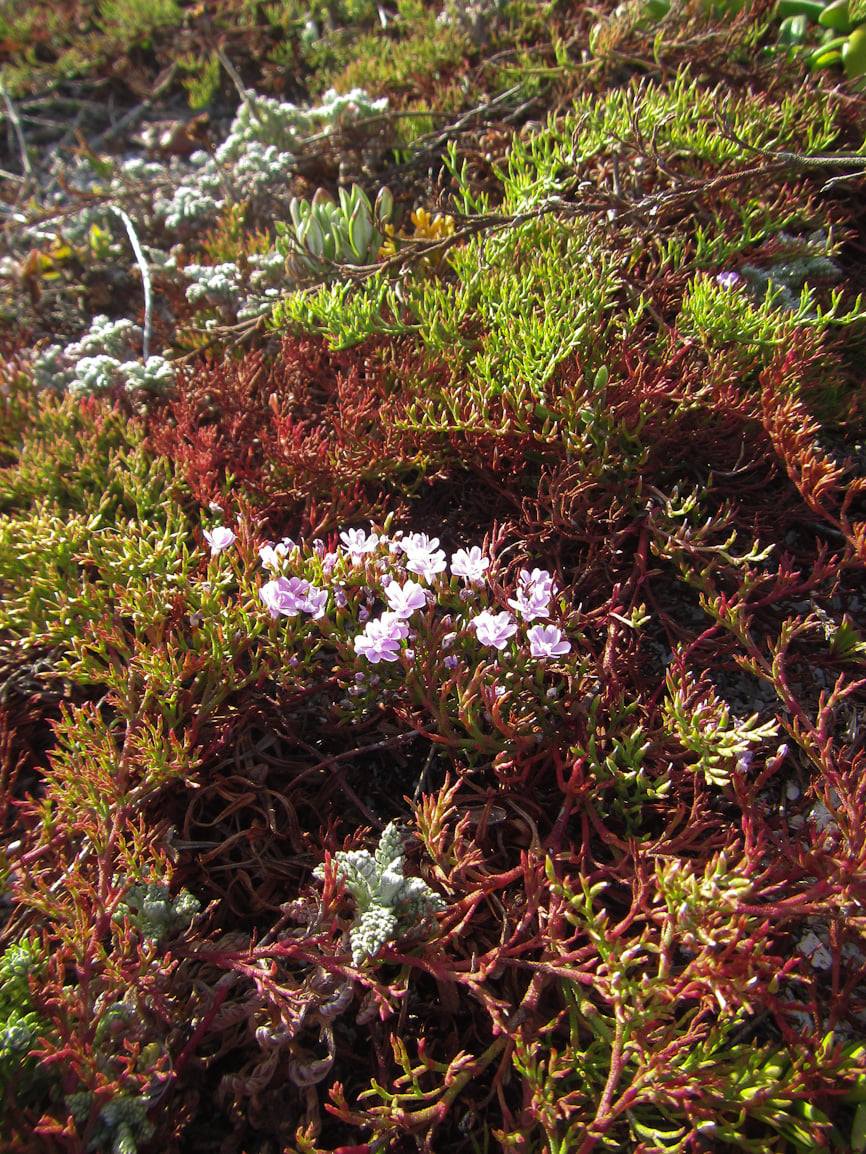
Sea lavender
An undescribed sea lavender (Limonium sp) apparently restricted to shell shingle vegetation in Seal Point Nature Reserve

Polygala ericaflora
A dwarf form of Polygala ericifolia
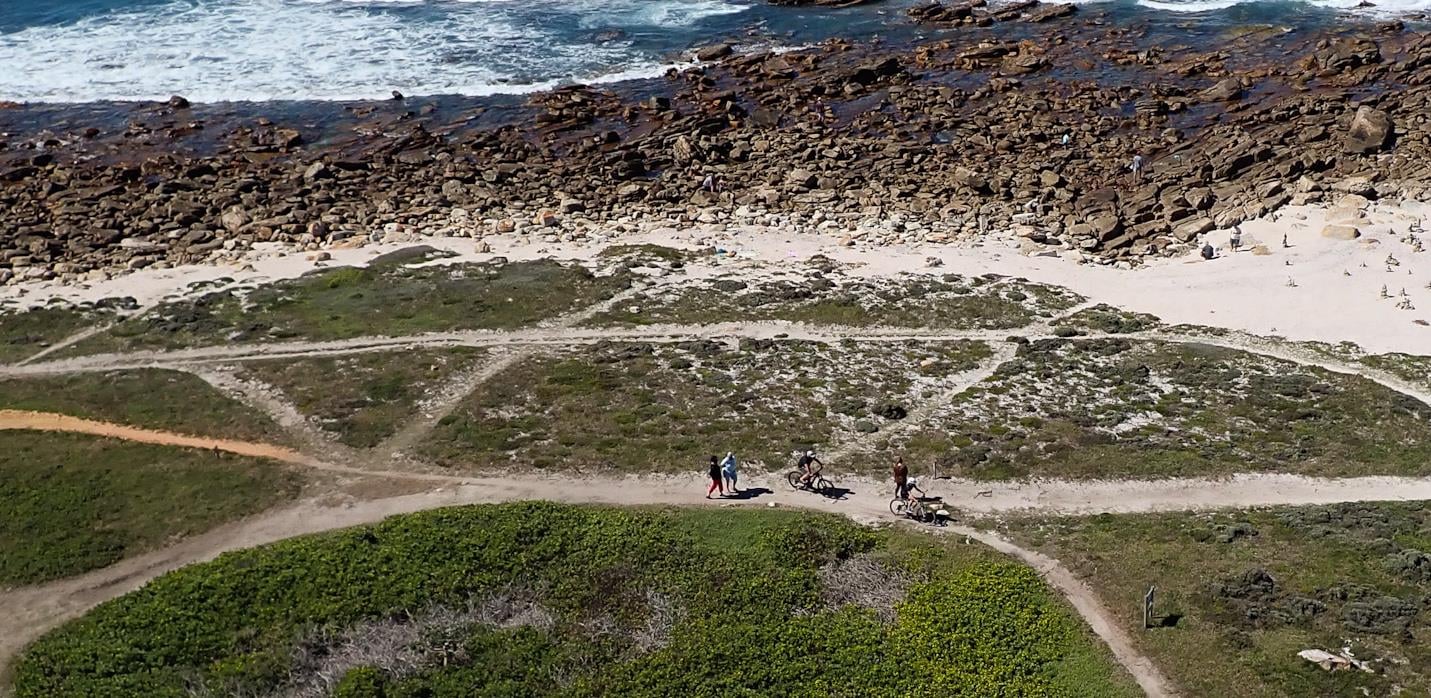
Path destruction
The chaotic path network in the vicinity of the lighthouse in Seal Point Nature Reserve has destroyed large areas of the irreplaceable shell shingle vegetation. FOSTER is seeking your support for implementing an improved network of paths to protect this priceless heritage

Fluffy beach indigo
The endangered fluffy beach indigo (Indigofera tomentosa) (foreground) and dune chaff flower (Achyranthemum sordescens) (background), both, growing on shell shingle in the Seal Point Nature Reserve

Dwarf plants
Ten plant species coexisting in a 20 x 40 cm mat of dwarf vegetation in the Seal Point Nature Reserve

Lessertia kentsetii
Lessertia kensitii and endangered species growing only at Cape Recife and Cape St Francis

Dune Chaff
A dense stand of dune chaff flower (Achyranthemum sordescens), a shrub restricted to coastal communities between Woody Cape and Cape St Francis
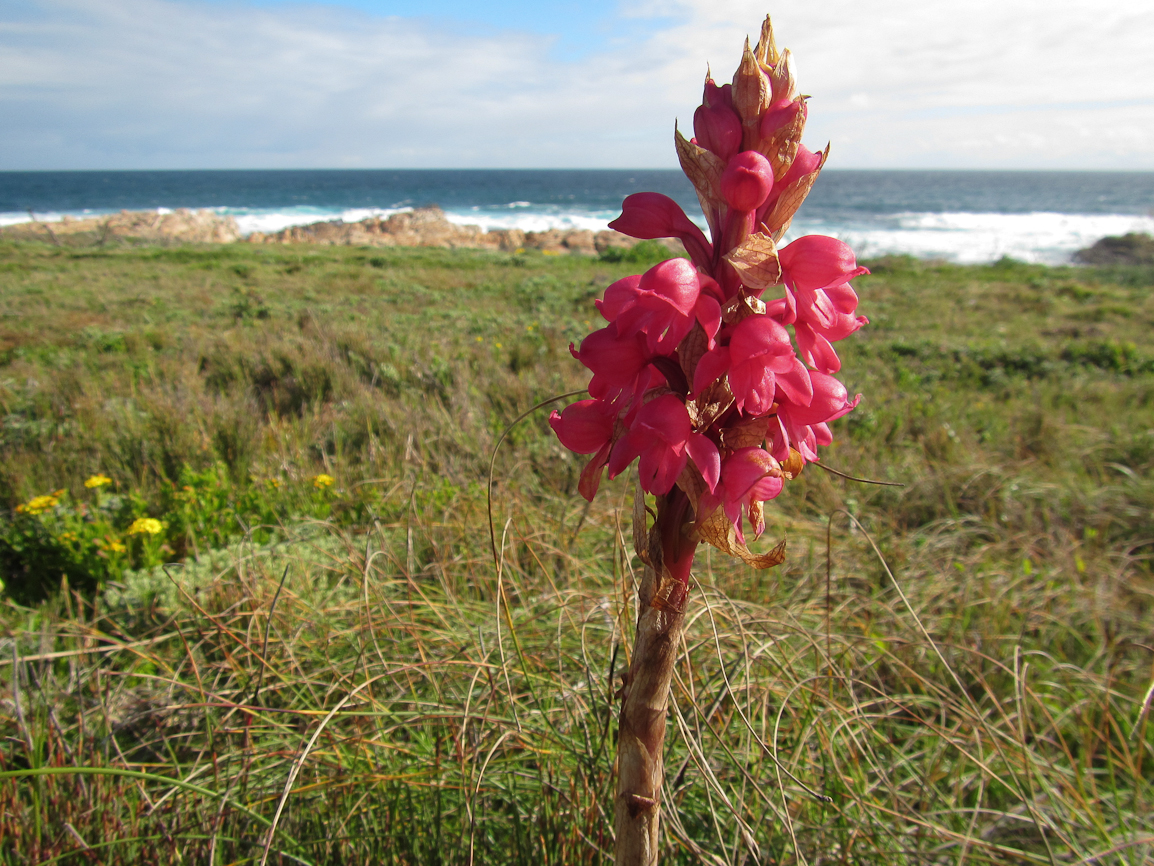
Red satyre
Red satyre (Satyrium princeps), FOSTER’s emblem, is another endangered species growing on shell shingle